
By Font Squared | November 2026
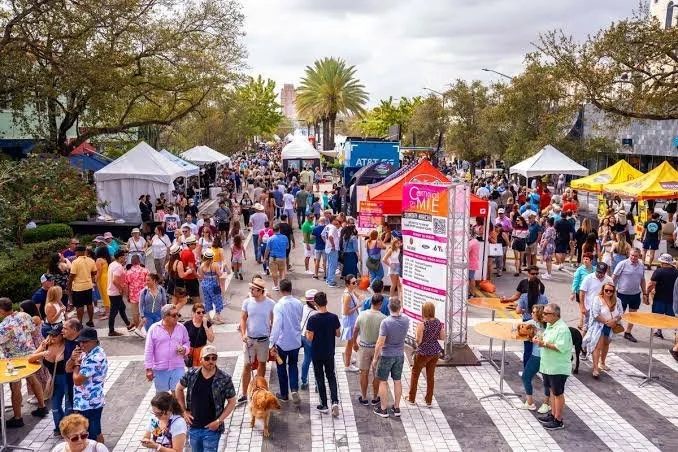
Image source: Secret Miami, “Carnaval on the Mile.”
A busy marketing calendar can look productive: posts published, ads running, newsletter sent. But activity is not the same as audience movement. For Florida arts and cultural nonprofits, the better question is whether each channel helps someone discover an event, register, attend, stay connected, or support the work.
A recent Central Florida example makes that distinction clear. United Arts of Central Florida's Q2 2026 Cultural Tourism Initiative report tracks paid promotion, a destination website, an email newsletter, and organic social in one place. Its results are not a universal benchmark for every arts organization. They are a useful local case study in why channel roles and outcomes matter more than a single headline metric.
One report, four different channel stories
The report covers April through June 2026. Its paid awareness campaign generated 47,507 clicks in Q2, up 35.7% from Q1, while spend increased 1.1%. At the same time, the report's website data showed users up 1.3% and page views up 3.8% quarter over quarter, but raw outbound clicks fell 29.9%. Organic publishing on the cultural tourism social accounts also contracted sharply: posts went from 171 in Q1 to 51 in Q2, while impressions fell from 53,941 to 14,296.
The newsletter had a different story. After a May redesign and a shift to twice-monthly sends, June closed at a 45.2% open rate and a 4.6% click rate, according to the report. These figures do not say one channel is universally best. They show that each channel can move differently, and the next question should be what action the organization needs it to support.
Read the full Q2 2026 Cultural Tourism Initiative report for the methods, context, and detailed scorecard.
Give each channel a job
Start with the part you control: your own website and email list. Your event page should answer the questions that stand between a person and a visit: What is happening? Who is it for? Is it free? When and where is it? How do I register? What should I know about parking, access, or bringing children? A clear page gives every other channel somewhere reliable to send people.
Email is the direct line to people who have already raised a hand. Use it to explain why an event may interest them, remind registrants what to expect, and follow up afterward with the next program or a way to stay involved. Segment only when you can do it accurately and usefully, such as by event interest or geography. A smaller, relevant message is often more helpful than one generic blast.
Organic social can help people see the people, place, and energy behind the program. It is also a discovery and sharing channel, not a substitute for your event page or list. A realistic rhythm beats an ambitious calendar that collapses in a busy season. Capture a few reusable photos or short clips during rehearsals, workshops, installations, or event days, then use them to tell a consistent story.
Paid promotion can extend a message to people beyond your current audience. Give it a clear destination and a measurable goal, such as event-page visits or registrations. Don't call a campaign successful only because it generated inexpensive clicks. Check whether those clicks reached the page, led to registrations, and resulted in attendance.
Build a simple campaign path
For one upcoming program, map the path from first impression to follow-up. Publish the event page first, then use email, organic posts, partner newsletters, and paid promotion to direct people to that page. Make the key details consistent wherever the event appears. After the event, send a thank-you and a next step while the experience is still fresh.
Use a few measures at each stage: page views for discovery, registrations for intent, attendance for participation, and follow-up engagement or donations for continued relationship. For free programs, ticket revenue is not the goal. A useful report can show how many people found the program, signed up, showed up, returned, or chose to support it.
Keep a short record of what changed. Did a redesigned event page make registration easier? Did a partner email bring new registrants? Did a reminder help registered guests attend? If the result is unclear, adjust one part of the path and test again. A small team does not need a complicated attribution system to learn. It needs a consistent set of questions and a place to record the answers.
Make your next month easier to plan
A channel plan is not a demand to be everywhere. It is a decision about where a message belongs and what the next step should be. Use your website and email as the dependable base, social to make the work visible and human, and paid promotion when you need added reach. Then evaluate channels against the action they are meant to support.
A quick channel check
Is there one clear event page to send people to?
Does each message make the next step obvious?
Are we tracking views, registrations, attendance, and follow-up?
Does paid promotion lead to an audience action, not just a click?
Can we sustain this publishing rhythm next month?
Florida arts organizations have different audiences, budgets, and seasonal rhythms. Start with your own baseline, learn from each campaign, and build the mix that reliably helps your community take part.
Want a clearer plan for your audience and owned channels?
Contact Font Squared or join the Font Squared email list to get practical Florida arts marketing guidance.
